Gas Leak Repairs in Kallangur
A gas leak repair in Kallangur runs in a fixed order: safety first, then the hunt, then the fix and the retest. A licensed gasfitter shuts the supply off, finds the exact point that is leaking, repairs or replaces what failed, and proves the system holds pressure before restoring the gas.
If we're late, $100 comes off your bill

- Licensed and InsuredEvery job done by a licensed plumber. QBCC No: 15024607
- Fixed Quote FirstFlat-rate pricing, agreed before any work starts
- Lifetime Labour WarrantyBacked by our Fix-It-or-It's-Free guarantee (T&Cs apply)
- $0 Call-Out FeesNo extra charge for nights, weekends or public holidays
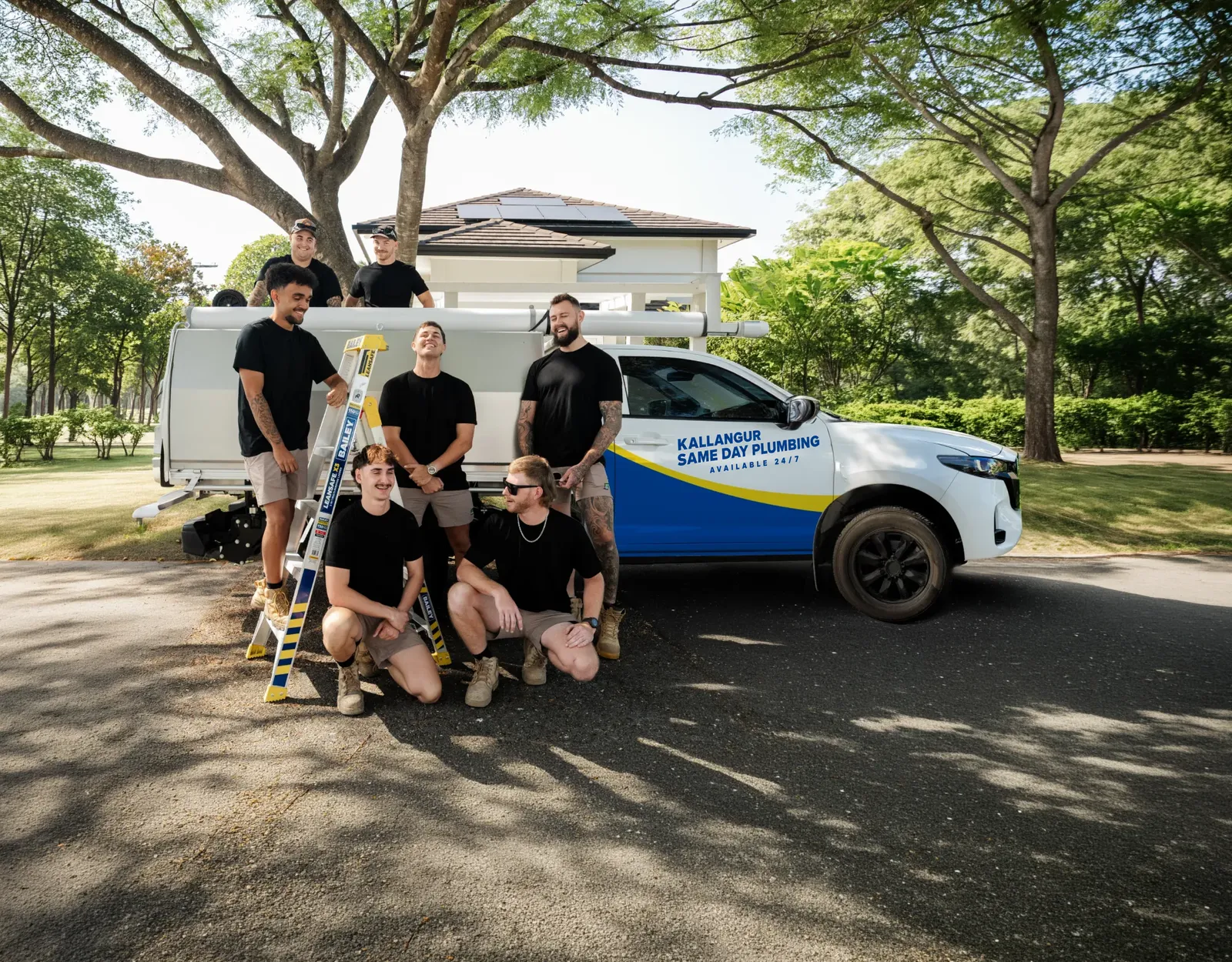
We are available 24/7, and there is no extra charge for nights, weekends or public holidays. Our Kallangur team covers the water side of the trade; this page is the gas. For the broader scope of the licence, start with our gas fitter page.
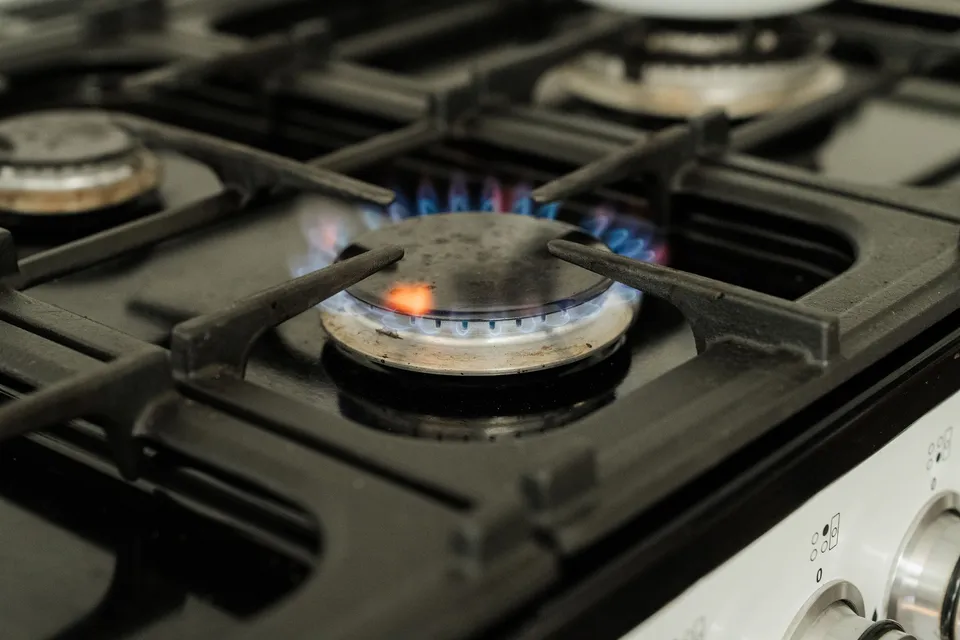
From Gas Smell to the Exact Fitting
The gasfitter shuts the gas off, isolates sections of pipework, pressure-tests to find the section that loses pressure, then checks its fittings with detergent until bubbles show the exact point. That order matters, because a house full of gas is a hazard first and a repair job second.
Householders get one check of their own. With the gas running, spray detergent mixed with water over the fittings: bubbles mean a leak, so switch the gas off and contact a licensed gasfitter.
The rest is our side of the fence. The pressure readings narrow the search to one section, the bubble check narrows it to one fitting, and the repair follows from there. Nothing gets relit or switched on until the system holds pressure again.
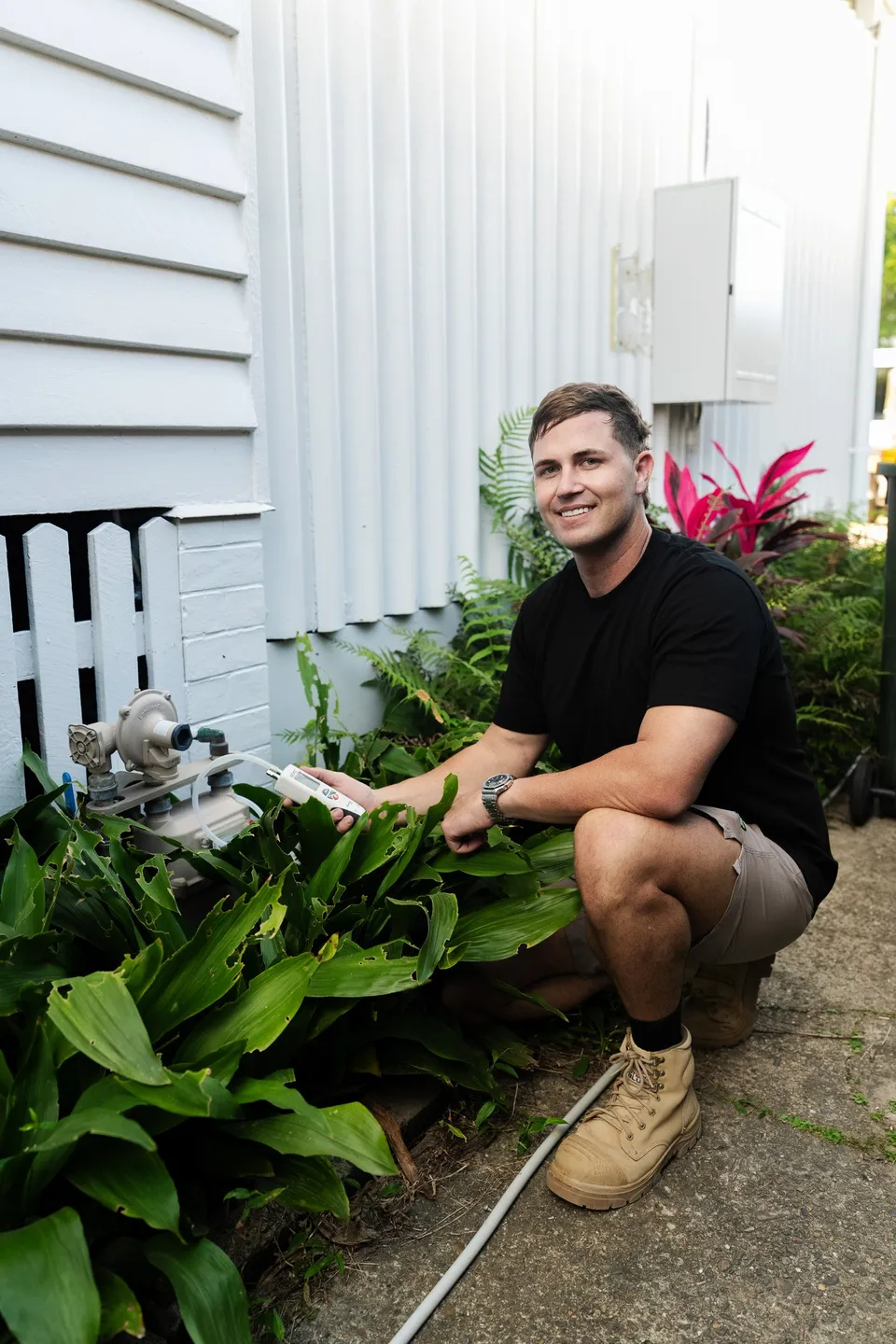
Why Only a Licensed Gas Fitter Can Fix It
A licensed gasfitter does the repair, and the options run by scale: swap a fitting or faulty regulator, replace pipe that can be reached, or bypass a run that cannot. The system is then retested before the supply returns.
Queensland law puts repairing and testing a gas system inside the definition of gas work, so both jobs belong to the licence. The choice between the three options comes down to where the leak sits:
- a single fitting or regulator is a swap and a retest;
- an accessible stretch of pipe is cut out and replaced;
- a run buried in a wall or under a slab gets bypassed with new pipe.
If the appliance on the end of the line needs work too, our gas cooktop installation page covers fitting and connection.
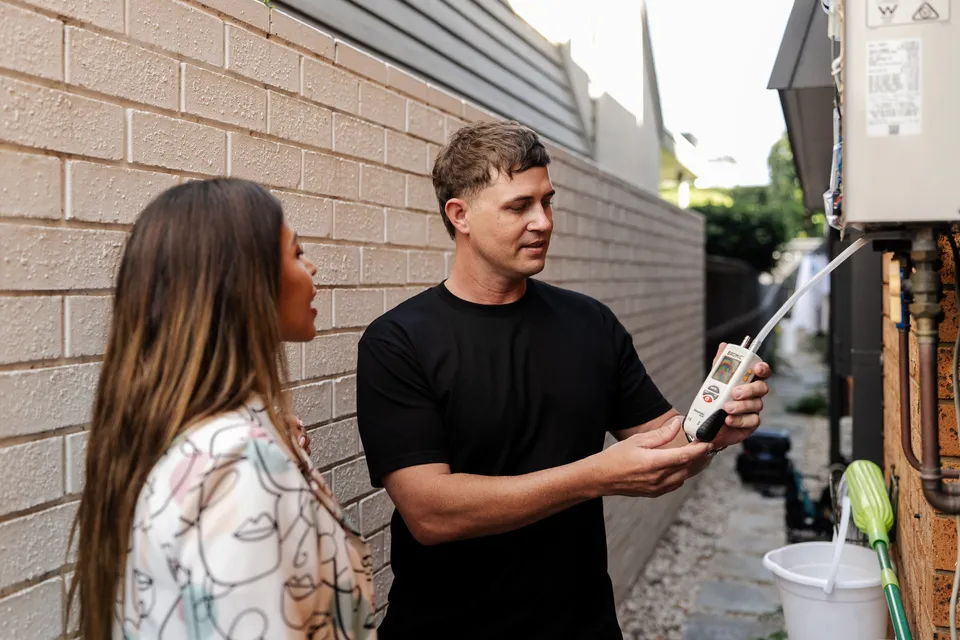
Fittings, Hoses and Joints That Let Gas Escape
Most leaks start at one of four points between the supply and the appliance. Each point fails in its own way:
Meter or cylinder fittings
threads and seals take the weather, and outdoor fittings wear first.
The regulator hose
flexing and sun age the rubber until it cracks.
Joints in the pipework
every bend and join is a place gas can creep from.
The final connection into the appliance
the last fitting before the burner, and one that gets moved at every service or swap.
A safety check also looks for corrosion, deterioration or damage anywhere on the system and its appliances. Fuel gas is highly flammable in an enclosed space, and a space that fills with it displaces oxygen, which can cause nausea, dizziness and, at worst, asphyxiation.
Where the gas goes depends on the fuel. Natural gas weighs less than air, so a leak tends to rise and drift away outdoors.
LPG is heavier, so it can pool in low-lying spots and drains, and that changes where the search starts. Outdoor barbecue points sit on our gas bayonet installation page.

Defect Notices and Compliance Certificates
Gas work can end with two documents: a defect notice and a compliance certificate. Each has its own trigger.
The defect notice covers any safety concern the gasfitter has about a system they are working on that is not put right on the day. Where the risk is imminent, the gasfitter makes the system safe first, then rings the operator of the distribution network and the Petroleum and Gas Inspectorate.
The compliance certificate is issued as soon as a job installs or alters a gas system, to certify the finished installation is compliant. A straight repair that only swaps a fitting may not need one, while a new line or a relocated appliance does. The full paper trail sits on our gas compliance certificates page.
Kallangur Housing and the Age of the Fittings
Housing here runs from 1960s brick homes through to the newest townhouse projects, and pipework ages with the house around it. A fitting installed when a place was built has had decades of threads, seals and weather behind it. A home fresh off the tools has fittings that have barely seen a season.
Area-level approvals counted 604 dwellings across five years, 77 of them in 2021-22 alone, so both ends of that age range sit side by side here. A gasfitter who has seen both eras knows where each one tends to fail.
How a Gas Leak Repair Runs
- 1

Describe the problem
Phone (07) 3520 4094 or fill in the form with what you're seeing in Kallangur. The more we know, the better we can prepare.
- 2

We Isolate and Test the System
We shut the supply off, isolate stretches of pipework and pressure-test each stretch, then work along the fittings with a detergent mix until the bubbles show exactly where your system is leaking.
- 3
Agree on the price
A fixed quote comes before any work starts: flat-rate pricing, no hidden fees, and your go-ahead first.
- 4

Pay on completion
Card or EFTPOS on site when everything's working, or ask us about Fix now, pay later.
Plumbing job in Kallangur?
$0 call-out fees, available 24/7, and same-day where we can.
Gas Leak Questions From Kallangur Homes
Call (07) 3520 4094How does a gasfitter actually find my gas leak?
By shutting the supply, isolating stretches of pipework and pressure-testing each one. The stretch that loses pressure holds the leak, and a detergent check on its fittings shows the exact point. From there the repair is a fitting swap or a new length of pipe, then a retest.
Can I check for a gas leak with soapy water?
Yes, as a check only. A detergent-and-water spray over the fittings while the gas is on will bubble wherever a leak sits. Shut the supply off and call a licensed gasfitter from there; the repair itself is never a home job.
Where do gas leaks usually start in a Kallangur home?
Where the supply meets the house, mostly. The usual suspects are the meter or cylinder connections, the regulator hose, joints along the pipework, and the last join before the appliance. Corrosion, deterioration or damage on the system and its appliances is what a safety check watches for.
Does LPG behave differently to natural gas in a leak?
Yes, the two fuels behave differently. Natural gas rises, because it weighs less than the air around it, and may disperse in open air. LPG sinks, being heavier, and can settle in drains and the low corners of a room, which changes where a gasfitter checks first.
Can I repair a gas leak myself in Kallangur?
No, only a licensed gasfitter may repair a gas leak in Queensland. Both the repair and the testing of a gas system are licensed gas work. And a cylinder valve is never a home job: repairing or removing one stays with the licensed gasfitter.

Call Us About the Gas LeakWe'll call you back.
Phone (07) 3520 4094 for a licensed plumber in Kallangur. We work under QBCC No: 15024607, with flat-rate pricing, no hidden fees and same-day where we can.
To claim your $0 call-out fee, call (07) 3520 4094 today.